THC VS CBD PRODUCTS
THC vs CBD Products: Complete Guide To Differences, Benefits, And How To Choose
THC vs CBD products is one of the most important comparisons in the modern cannabis world. Almost everything on the shelf flower, vapes, gummies, oils, capsules, topicals leans toward THC, CBD, or a mix of both.
If you want to choose the right product for pain, stress, sleep, mood, or simple relaxation, you need to understand how THC and CBD differ, how they feel, and when each one actually makes sense.
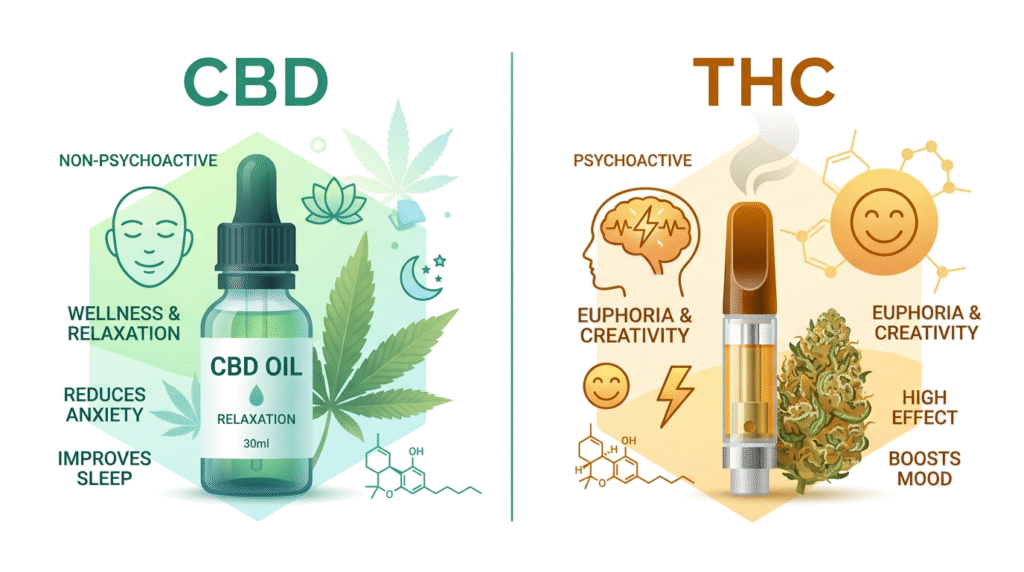
THC is the main compound in cannabis that makes you feel high.
CBD does not produce a classic high, but it can influence how your body and mind feel in a quieter way. Both are useful. Neither is inherently better. The real power comes from matching the right cannabinoid, product type, and dose to your specific goal.

What Are THC And CBD?
THC (tetrahydrocannabinol) and CBD (cannabidiol) are two of the main cannabinoids found in the cannabis plant. They share a plant source but behave very differently in the human body.
THC binds strongly to certain receptors in the brain and nervous system.
That strong binding is what changes your perception and mood. It can alter how you experience time, sound, taste, touch, and thought. THC is responsible for the classic effects people think of as being “high.”
CBD interacts more gently and indirectly with multiple systems in the body. It does not typically produce a noticeable high.
Instead, it can smooth tension, support a calmer mood, and influence how your body experiences stress and discomfort. Many people use CBD as a daily support compound rather than a one‑time “hit.”
When you look at THC vs CBD products on a shelf, the choice comes down to whether you want an obvious change in consciousness or more subtle support without intoxication.
How THC Products Feel Vs How CBD Products Feel
Understanding the felt experience is the fastest way to get a grip on THC vs CBD products. Two people can use the same format—like a gummy or a vape—and have completely different experiences depending on whether it is THC‑dominant or CBD‑dominant.
How THC Products Feel
THC products usually create a very noticeable shift in how you feel and think. Common sensations include:
- Euphoria and mood lift: You may feel happier, more amused, or more optimistic.
- Sensory enhancement: Music can sound richer, food can taste better, colors and textures can feel more interesting.
- Relaxed body: Muscles soften, physical tension fades, and sitting or lying down becomes very appealing.
- Altered time perception: Time can feel slower or more fluid.
- Stronger appetite: The classic “munchies.”
At lower doses, THC can feel warm, sociable, creative, and relaxing. At higher doses, especially for newer users, THC can also cause: - Anxiety or paranoia.
- Racing thoughts.
- Confusion or mental fog.
- Heavy, sedated body sensations that make it hard to move or function.
THC products are best for times when it is safe to be impaired—after work, on a day off, in the evening, or when you specifically want a full psychoactive experience.
How CBD Products Feel
CBD products usually work in the background rather than taking center stage. Most people describe CBD effects like this:
- Calmness: A lower sense of internal pressure or racing thoughts.
- Emotional smoothing: Less dramatic swings in stress or agitation.
- Subtle body ease: Slightly looser muscles and a more comfortable baseline feeling.
- Clear head: No obvious high, no major changes in perception.
CBD does not typically impair memory or reaction time at usual doses. For many people, CBD feels like “less of a problem” rather than “more of a buzz.” You might notice you are less on edge, less irritable, and more able to deal with your day.
CBD products are often used in the morning, during work, and in the evening because they fit around normal tasks without causing intoxication.
THC vs CBD Products By Type
THC and CBD can both be delivered through similar product types, but the experience and best uses differ.
Flower (Bud) And Pre‑Rolls
- THC flower: Dried cannabis rich in THC. When smoked or vaporized, it gives fast effects and a full-spectrum high. Great for people who enjoy traditional consumption and quick onset.
- CBD flower: Usually hemp or CBD‑rich cannabis with very low THC. Smoked or vaporized, it allows the ritual and flavor of cannabis without a strong high. Useful for people who like smoking but want to stay clear‑headed.
Pre‑rolls (ready‑made joints or blunts) exist for both THC and CBD flower, offering convenience for those who do not want to grind or roll.
Vapes: Carts, Pods, And Disposables
- THC vapes: Contain THC‑rich oil (distillate, live resin, rosin, etc.). Effects arrive quickly and can be strong. Ideal for on‑demand relief or recreational use.
- CBD vapes: Contain CBD oil with little or no THC. Provide quick calming effects without heavy intoxication, often used for fast stress relief.
Vapes are popular because they are discreet, portable, and easy to dose in small steps—one puff, wait, then decide whether to take another.
Edibles: Gummies, Chocolates, Drinks, And Baked Goods
- THC edibles: A go‑to for long‑lasting effects. They take longer to kick in (often 30–120 minutes), but once active, the high can last several hours. Great for extended relief or long recreational sessions, but easy to overdo if you are impatient.
- CBD edibles: Often used for steady, daily support. They also take time to start working but tend to create a slow, gentle shift rather than a dramatic high. Many people use CBD gummies or capsules as part of a daily routine for mood and tension.
Edibles are powerful because of their duration. With THC edibles, careful dosing is essential. With CBD edibles, consistency over time matters more than a single hit.
Oils And Tinctures
Oils and tinctures are drops placed under the tongue or added to food and drinks.
- THC oils: Offer measured dosing and flexible timing. You can titrate up or down slowly to find your personal dose. Many medical users and experienced consumers like THC tinctures for their predictability.
- CBD oils: One of the most popular CBD formats. Easy to measure by the dropper, simple to include in morning or evening routines, and available in multiple strengths.
Oils and tinctures are ideal when you want precision, repeatability, and the option to adjust your dose by small increments.
Capsules And Softgels
Capsules are another precise, no‑frills format.
- THC capsules: Used where allowed, often for consistent dosing in medical contexts (for pain, sleep, etc.). Onset and duration are similar to edibles.
- CBD capsules: Frequently used for wellness because they are simple, tasteless, and easy to add to a vitamin regimen.
If you prefer a more “pharmacy‑style” approach instead of candies or smoking, capsules are a natural fit.
Topicals And Balms
- THC topicals: Creams, salves, balms infused with THC. Often used for localized discomfort. Most do not produce a noticeable high when used on intact skin.
- CBD topicals: Widely used for localized relief, massage, and skincare. Often combined with ingredients like menthol, arnica, or botanical oils.
Topicals focus on the area you apply them to. They are a good option when you want targeted support without whole‑body effects.
THC vs CBD Products For Common Goals
To understand THC vs CBD products deeply, you need to see how they perform when the user has a specific outcome in mind.
Relaxation After A Long Day
- THC products: Flower, vapes, and edibles can rapidly switch your state from stressed to relaxed. A moderate THC dose can melt tension and create a pleasant, floaty feeling. The trade‑off is intoxication and potential next‑day grogginess if you overdo it.
- CBD products: Oils, gummies, or vapes can take the edge off stress while letting you stay clear. CBD relaxation is quieter but often more compatible with tasks like cooking, talking with family, or light hobbies.
If your night is wide open, a THC product might be your go‑to. If you still need to function and interact clearly, CBD is usually safer.
Managing Stress And Mild Anxiety
- THC products: At low doses, some people feel less stressed and more at ease. At higher doses, though, THC can trigger anxiety, especially in sensitive individuals or unfamiliar settings.
- CBD products: Generally better suited for stress and mild anxiety. CBD is often used as a daily tool to support a calmer baseline. It does not guarantee zero anxiety, but it tends to carry a lower risk of making things worse.
For people with a history of anxiety, starting with CBD or a CBD‑dominant product is usually a more comfortable approach than jumping straight into strong THC.
Sleep And Insomnia
- THC products: Often the stronger option when you can’t fall asleep. THC can slow your thoughts, relax muscles, and make your eyelids feel heavy. Edibles and tinctures with THC are popular for night use because they last.
- CBD products: Helpful when sleep issues are driven by stress or physical tension. CBD may not knock you out, but it can help create a more peaceful state where sleep is easier.
Many users find a combination works best: a product with both THC and CBD, or separate THC and CBD taken together. THC prompts sleepiness; CBD smooths the experience and may help reduce the chance of feeling overly wired or groggy.
Pain, Aches, And Discomfort
- THC products: Often perceived as more powerful for pain, especially when it’s intense or constant. THC can shift your focus away from the pain and change how your nervous system processes it.
- CBD products: Frequently used for ongoing aches, inflammation support, and background discomfort. CBD might be less dramatic, but it can be easier to use every day without disrupting function.
Many people use both: CBD for baseline support during the day, THC for flare‑ups or nights when pain is intense. Topicals with THC and/or CBD can target specific joints or muscles.
Focus And Daily Functioning
- THC products: Generally not ideal for tasks that require precision, fast reactions, or complex problem‑solving. Even moderate doses can alter attention, memory, and coordination. A tiny microdose might help some experienced users focus, but that takes experimentation and careful control.
- CBD products: Much better suited for focus. By softening stress and physical discomfort, CBD can make it easier to concentrate without blurring your thoughts.
If you care about productivity, keeping THC use to off‑hours and leaning on CBD during the day is usually the smarter long‑term strategy.
Recreational Enjoyment And Social Use
- THC products: The core of recreational cannabis. The high can make music, games, art, and social interaction more fun and immersive. THC flower, vapes, edibles, and drinks dominate parties and sessions.
- CBD products: Often used as a calmer, “light social lubricant.” They can ease social tension without making anyone obviously high. CBD can also be used to soften the intensity of a THC high that feels too strong.
If your primary goal is fun and altered consciousness, THC products are central. CBD products are more about adding comfort, balance, or inclusion for those who do not want to be intoxicated.
THC vs CBD Dosage And Tolerance
Dosing is where many users make mistakes, especially with THC edibles.
THC Dosage
THC is potent. Small changes in dose can cause big differences in effect.
- Microdose: Around 1–2 mg THC. Often used for very subtle effects, sometimes for creativity or mood.
- Low dose: 2.5–5 mg THC. For many new users, this is enough to clearly feel something.
- Moderate dose: 5–10 mg THC. Comfortable high for many occasional users, too much for some beginners.
- High dose: 20+ mg THC. Reserved for experienced, tolerant users; can be overwhelming for most people.
For inhaled products, dose is often measured in number of small puffs. For edibles, mgs on the label matter. Patience is critical—always wait to see how you feel before taking more.
CBD Dosage
CBD is gentler but still benefits from structured dosing.
- Low dose: Around 5–10 mg CBD. Subtle, sometimes used as a starting point.
- Standard dose: 20–40 mg CBD. The range where many people begin to feel consistent effects.
- Higher dose: 50–100+ mg CBD. Used by some under guidance or after gradual titration.
Because CBD does not produce an obvious high, you often judge its effect over days or weeks, noticing changes in stress levels, sleep patterns, or general comfort rather than a single “wow” moment.
Tolerance
- THC tolerance builds quickly with frequent use. If you use THC daily, you may find you need more to achieve the same feeling. This can be managed by taking breaks or lowering your dose over time.
- CBD tolerance does not build in the same obvious way for most people. Many can keep a similar CBD dose for long periods.
Understanding tolerance helps you avoid chasing ever higher THC doses and keeps your products effective longer.
Side Effects Of THC vs CBD Products
Every active compound has side effects; THC and CBD are no exception.
THC Side Effects
Most common THC side effects include:
- Dry mouth and dry eyes.
- Impaired coordination and slower reaction time.
- Short‑term memory issues.
- Anxiety, paranoia, or panic at high doses.
- Elevated heart rate in some people.
- Grogginess or “weed hangover,” especially after large doses at night.
In extreme cases, especially with very high edible doses, users may experience intense disorientation, nausea, or prolonged discomfort. Respecting dose and context is crucial.
CBD Side Effects
CBD side effects are usually milder but can include:
- Dry mouth.
- Drowsiness, particularly at high doses.
- Digestive upset in some users.
- Changes in appetite.
CBD can also interact with certain medications. Anyone taking prescription drugs should be cautious and consider professional guidance before heavy or long‑term CBD use.
Mixed THC/CBD Products: Ratios And Balance
Not all products are purely THC or CBD. Ratio products intentionally combine both. This is where the nuance of THC vs CBD products really shines.
Why Ratios Matter
CBD can moderate the intensity of THC. When taken together, many people describe the high as smoother, less anxious, and more manageable. THC can, in turn, amplify some of CBD’s perceived effects, such as mood lift and comfort.
Common ratios include:
- 1:1 THC:CBD – Equal parts THC and CBD. Often produces a clear but balanced effect, suitable for some daytime and nighttime use.
- CBD‑dominant (like 2:1, 4:1, 10:1 CBD:THC) – CBD is primary, THC plays a small supportive role. Good for people who want mostly CBD with a touch of THC’s extra push.
- THC‑dominant (like 10:1 THC:CBD) – Classic THC experience with mild buffering by CBD.
Choosing a ratio lets you fine‑tune intensity versus clarity.
When To Use Mixed Products
- For pain: Many find THC+CBD works better than either alone.
- For sleep: THC+CBD can give sedation plus smoother mood.
- For anxiety‑prone THC users: Adding CBD can reduce the chance of a bad high.
- For beginners: A balanced product is often less intimidating than pure THC.
How To Choose Between THC Vs CBD Products
A practical decision path can simplify the choice.
- Define your goal
Ask: “What do I want from this product?”
- Strong high, deep relaxation, intense relief, or recreation? THC or THC‑dominant product.
- Calm, stress support, daytime functioning, or gentle relief? CBD or CBD‑dominant product.
- Check your responsibilities
If you plan to work, drive, study, or handle important tasks, avoid THC or keep it extremely low. CBD is usually compatible with responsibilities. - Consider your history and sensitivity
- If THC has made you anxious or paranoid before, start with CBD or a balanced THC+CBD product.
- If you have never used cannabis, start low with anything containing THC.
- Choose a format that fits your lifestyle
- Need fast effects? Inhalation or sublingual oils.
- Need long‑lasting effects? Edibles, capsules, or oils.
- Need local support? Topicals.
- Start low, adjust slowly
Whatever you pick, use a small dose first, wait long enough to evaluate the effect, and only then adjust. Track what you use and how you feel; this turns guesswork into a personal playbook.
Final Thoughts On THC vs CBD Products
THC vs CBD products is not a battle with one winner. It is a toolbox filled with different tools. THC delivers intense effects, strong relaxation, and powerful relief for some problems—but it comes with intoxication and the need for careful timing. CBD offers a softer, non‑intoxicating way to support mood, stress, and physical comfort, and it fits more easily into everyday life.
For many people, the smartest path is learning when each cannabinoid fits best: THC for evenings off and stronger needs, CBD for daily balance, and thoughtful combinations when you want the advantages of both. When you understand the differences in how THC and CBD feel, what types of products exist, and which goals they serve, you can choose products that truly match your needs instead of copying what someone else uses.