kawali carts
$20.00
Kawali carts are marketed as high potency, terpene rich cartridges that combine strong THC content with smooth, flavorful hits and a variety of strain choices
Did you like this product? Add to favorites now and follow the product.
Description
Kawali Carts: Ultimate Guide to Strength, Flavors, Effects, Safety, and Real vs Fake
Kawali carts are THC vape cartridges marketed as premium, high‑potency options for users who want strong effects, rich flavor, and smooth vapor in a simple 510‑thread format. They’re often tied to “Kawali Farms” or “Kawali live resin” branding and promoted as full‑gram carts filled with pure THC oil and cannabis‑derived or organic terpenes. Descriptions emphasize that Kawali carts deliver thick, satisfying hits, long‑lasting highs, and “one of the best” vaping experiences available.
At the same time, there is clear confusion and inconsistency in how Kawali carts are described online. Different sites list THC ranges from 40–60% in some versions up to 80–95% in others, and Kawali is sold both as a supposedly established California medical‑market brand and as a mail‑order, “ship anywhere” product from various third‑party shops. That mix of messaging makes Kawali carts a classic example of a brand that may have some real, licensed presence in certain markets but is heavily used as a name on grey‑market and potentially fake cartridges elsewhere.
This guide follows your updated format to break down Kawali carts in detail: how they’re described, what they claim to offer, where people usually buy them, how strong and flavorful they are supposed to be, the pros and cons, how to use them properly, what to do when they don’t work, how to think about real vs fake, safety and lab issues, how they compare to other carts, and what consumers say about them.
Kawali Carts Review
Kawali carts are generally presented as full‑gram 510‑thread cartridges designed for thick, high‑quality cannabis oil. The hardware is usually described with:
-
A glass tank and metal base suitable for thick distillate, live resin, or “diamond sauce.”
-
Low‑resistance coils meant to heat viscous oil efficiently and give smooth hits.
-
A standard 510 connection that works with most vape pen batteries and low‑maintenance disposables.
Several product descriptions label Kawali carts as “high terpene full spectrum extract” or “diamond sauce” cartridges, suggesting that at least some versions use live resin or live resin sauce rather than simple distillate. Others explicitly say the carts are filled with high‑quality distillate mixed with organic terpenes, combining a refined THC core with flavor and aroma compounds from cannabis or other plants.
When Kawali carts are portrayed at their best, the vaping experience is described as:
-
Very smooth and flavorful, with low‑resistance coils providing easy airflow and thick clouds.
-
Potent and satisfying, with THC levels well above 80% in premium variants and strong psychoactive effects.
-
Reliable and “problem‑free,” with carts designed to be leak‑resistant and straightforward to use.
Some sources even claim Kawali has a “long‑standing reputation” in California’s medical market and that the brand is “committed to providing the finest quality cannabis cartridges.” Whether that reputation is universally recognized is debatable, but it’s how Kawali positions itself: a high‑potency, full‑flavor, live resin or distillate brand that focuses on small‑batch quality and strong terpene profiles.
On the more questionable side, other sellers describe Kawali carts as tested between 40–60% THC in certain versions, with the oil “filled with 60% pure THC extracted oil” and the rest presumably terpenes and other compounds. That wide range across different sites hints that there are multiple formulations and possibly multiple producers using the Kawali label, which can lead to very different experiences depending on which version a user gets.
kawali carts Price and Where People Commonly
Kawali carts are typically marketed as premium or near‑premium products. Many online listings emphasize:
-
Full gram carts with high THC levels (often advertised in the 80–95% range for Kawali Farms carts).
-
High terpene full spectrum extract or diamond sauce concentrates.
-
“Problem‑free” vaping and “advanced” cartridge design.
Because of this positioning, Kawali carts are usually priced higher than generic “no‑name” distillate carts, but they’re often competitive with other branded live resin or high‑end distillate vapes.
People commonly encounter Kawali carts in several contexts:
-
Online “big vape stores” and “clean cartridges” style sites that claim to sell Kawali Farms carts with THC levels between 80–95% and only “pure THC oil and cannabis terpenes.”
-
Grey‑market vendors and bulk cartridge sites that list Kawali alongside other trendy names like Pluto Labs, Buzzbar, Baked Bar, and various exotic brands.
-
Occasional references to Kawali in connection with California markets, where some sellers say Kawali carts are a known medical‑market brand.
Some sites talk about authorized dispensaries, store locators, and QR code verification for Kawali Farms carts, suggesting a more formal, licensed distribution channel. Others clearly sell Kawali as part of a broad, “we ship anywhere” catalogue that includes many obviously black‑market brands.
For a buyer, this means:
-
Kawali carts from a real, licensed dispensary in a legal state may be legitimate, properly tested products.
-
Kawali carts bought from random online sites or unlicensed sellers may be unregulated fills that simply use the Kawali name and packaging.
Because of that dual presence, price and source become important clues. Very low prices, bundle deals with unrelated brands, and offers to ship into illegal states strongly suggest that those Kawali carts are not coming from a regulated, licensed producer.
Benefits and Use Cases of Kawali Carts
Kawali carts are marketed with a clear benefits story: high strength, rich flavor, smooth draws, and a versatile range of effects depending on strain choice. Across different descriptions, the key benefits include:
-
High potency for strong effects: THC levels are often advertised between 80–95% in Kawali Farms carts, making them appealing to heavy‑tolerance users and those seeking intense recreational or therapeutic effects.
-
Terpene‑rich flavor: Kawali carts are said to use either high terpene full spectrum extract or distillate mixed with organic terpenes, leading to complex aroma and taste profiles that reflect the underlying strains.
-
Smooth, low‑resistance coils: Hardware is described as using low‑resistance coils for smooth, effortless draws, reducing harshness and coughing when used correctly.
-
Variety of strain types: Indica, sativa, and hybrid options are offered, allowing users to tailor their experience to relaxation, energy, or balanced effects.
Common use‑cases for Kawali carts include:
-
Evening relaxation and sleep support with indica or indica‑dominant hybrid strains, where users are looking for sedation, pain relief, and stress reduction.
-
Daytime productivity or creativity with sativa strains, aimed at increased energy, mental focus, and mood elevation.
-
Balanced, anytime use with hybrid strains, combining mental uplift with body relaxation.
-
Recreational sessions where users want something that hits harder than flower, with the convenience of a vape pen.
Some marketing language also highlights that Kawali carts are made in small batches, emphasizing freshness and “maximum potency” and presenting them as a top option for concentrate users who care about taste and terpene integrity.
kawali carts THC Content and Potency
Kawali carts are consistently marketed as strong, but reported THC ranges differ between sellers and product lines:
-
Kawali Farms carts and certain premium versions are said to contain THC levels between 80–95%, clearly high‑potency products.
-
Some live resin Kawali carts are described as testing between 40–60% THC in certain batches, suggesting fuller terpene and cannabinoid content but lower pure THC percentage.
-
Other descriptions mention carts filled with “60% pure THC extracted oil” plus additional terpenes and minor cannabinoids.
There’s also mention of Kawali carts made from specific crosses like Cherry Pie x Tangie, with a hybrid of 75/25 indica/sativa, indicating at least some strain‑specific formulations intended to deliver particular effect profiles.
When the THC levels are genuinely in the 80–95% range, users can expect:
-
A very strong high from a small number of hits.
-
A quick onset, often within minutes of inhalation.
-
Long‑lasting effects, particularly for less frequent users or those with lower tolerance.
For carts in the 40–60% THC range but with high terpene and minor cannabinoid content, the experience may be more balanced but still quite potent, with the entourage effect making the high feel fuller than the number alone suggests.
Because Kawali carts span multiple THC ranges across different sources, the safest assumption is that any Kawali cart you pick up—especially one labeled at or above 80% THC—should be treated as a strong product. Both new and experienced users should start with small doses, wait for effects to develop, and only then decide whether to take another hit.
kawali carts Flavors and Strain Profiles
Kawali carts leverage strain‑specific and flavor‑focused profiles to stand out. Some descriptions highlight Kawali live resin carts as hybrid‑dominant indica products created from cross strains like Cherry Pie x Tangie, implying a flavor and effect profile combining sweet cherry, citrus, and classic Kush notes.
Other information about Kawali carts mentions:
-
Cartridges “made with specific strains,” with varying potencies and terpene compositions, suggesting a menu of multiple strains rather than generic “flavors.”
-
High terpene full spectrum extract or diamond sauce formulations, indicating the use of terpene‑rich concentrates like live resin sauce.
-
A range of flavors from sweet and fruity to more earthy and pungent profiles, reflecting natural cannabis aromas.
Broadly speaking, Kawali’s flavor and strain offerings are described along these lines:
-
Indica and indica‑dominant hybrids: Often associated with deeper, earthier flavors and sedative effects that help with relaxation and nighttime use.
-
Sativa strains: Linked with more energizing, uplifting effects and flavors that can include citrus, tropical fruit, or hazy spice.
-
Hybrids: Combining elements of both, with balanced effects and complex flavor profiles.
Beyond the marketing, the actual flavor quality will depend on whether the cart contains true high terpene extract, live resin, or simply distillate with added terpenes. Genuine high terpene full spectrum extract is likely to taste richer and more “weed‑like,” while simple distillate with flavor additives may taste more like perfumed juice.
Pros and Cons of Kawali Carts
Pros
-
High THC potential: Many Kawali carts, particularly Kawali Farms products, are advertised with THC levels up to 95%, delivering very strong effects for those who want them.
-
Terpene‑rich experiences: The use of high terpene full spectrum extract, diamond sauce, or organic terpenes can give Kawali carts robust aroma and flavor.
-
Live resin options: Kawali live resin carts provide a more full‑spectrum experience, retaining more of the plant’s original compounds for richer effects.
-
Wide strain coverage: Indica, sativa, and hybrid carts are available, allowing users to choose based on their desired effect profile.
-
Smooth hardware: Low‑resistance coils and carts designed for thick oil can offer smooth draws and powerful hits.
Cons
-
Inconsistent descriptions: Different sources list wildly different THC ranges and formulations, making it unclear exactly what you’re getting unless you buy from a clearly licensed source.
-
Grey‑market focus: Much of Kawali’s presence online is through grey‑market “big vape stores” and multi‑brand resale sites, rather than transparent, licensed producers.
-
Limited verifiable lab data: While “lab tested” is frequently claimed, batch‑linked lab reports are rarely accessible to consumers.
-
Counterfeit risk: Kawali packaging and branding can be used by others, and there’s no easy way for consumers to distinguish real Kawali carts from clones in unregulated markets.
-
Very high potency can overwhelm: THC levels up to 95% are not beginner‑friendly and can easily cause anxiety or other side effects if users overconsume.
How to Use Kawali Carts
Using Kawali carts is similar to using any 510‑threaded cartridge, but potency and oil thickness mean good technique matters.
-
Select a quality battery
-
Use a reliable 510 battery, ideally with variable voltage.
-
Avoid cheap, unregulated batteries that may overheat or deliver inconsistent power.
-
-
Attach the Kawali cart
-
Screw the cartridge onto the battery until it is snug.
-
Don’t overtighten; this can damage the threads or center pin.
-
-
Set your voltage
-
Start at a low to medium setting to preserve flavor and reduce harshness.
-
Increase slightly only if vapor production is too low once you’ve tested at low voltage.
-
-
Take initial test hits
-
Take one short inhale of 1–2 seconds and exhale.
-
Wait for 10–20 minutes to gauge how strong that hit feels before taking another.
-
-
Adjust your dose carefully
-
If you want stronger effects, add a second or third small puff spaced several minutes apart.
-
Avoid chain‑hitting; stacking many hits in quick succession is the fastest way to overshoot into anxiety or discomfort.
-
-
Store properly
-
Keep the cart upright and away from heat and direct light.
-
Don’t leave Kawali carts in hot cars or under direct sunlight, as heat can thin oil and cause leaks or degrade terpenes.
-
Following these steps will help you enjoy the strength and flavor of Kawali carts without burning the oil or overwhelming yourself with too much THC at once.
Kawali Cart Not Working (Troubleshooting)
If your Kawali cart isn’t behaving as expected, try the following:
No vapor
-
Confirm that the battery is charged and switched on.
-
Ensure the connection is tight but not over‑tightened.
-
Clean the contact points with a cotton swab to remove any oil residue.
-
Try the cart on another battery to rule out a faulty power source.
-
If there’s still no vapor and the cart isn’t empty, the internal coil may be defective.
Weak hits
-
Increase voltage slightly if you’ve been using the lowest setting.
-
Check airflow by taking a pull without power; if air moves freely but vapor is weak, the oil may be thinner or less potent than expected.
-
If you’ve purchased from a dubious source, the cart may not match advertised potency.
Clogs and tight draw
-
Warm the cart in your hands or pocket to soften thicker oils, especially live resin or diamond sauce.
-
Take a couple of light primer puffs (activating the battery without fully inhaling) to warm the airway.
-
Store the cartridge upright to prevent oil pooling in the mouthpiece.
Leaking or spitback
-
Avoid leaving the cart in very hot environments, which can thin oil and force it out of seals.
-
Wipe away excess oil from the mouthpiece and base.
-
Use gentle, shorter inhales to reduce the chance of flooding the airway and causing spitback.
If you bought the cart from a licensed dispensary, you may be able to return or exchange a faulty cart according to store policy. If it came from an unlicensed seller and behaves badly even after troubleshooting, the safest move is to stop using it.
Kawali Carts: Real vs Fake (Authenticity)
With multiple sites, varying THC claims, and widespread grey‑market availability, authenticating Kawali carts is challenging. Some sellers assert that Kawali is “real” and that there are “several variations, but they are easy to spot in the legal market.” Others simply bundle Kawali with many other trendy names, offering it wherever shipping is not clearly legal.
Here are ways to think about real vs fake Kawali carts:
-
Real or regulated Kawali carts:
-
Sold through licensed dispensaries and state‑legal delivery services.
-
Packaged with proper compliance labeling, including batch information, THC percentages, and manufacturer details.
-
Sometimes include QR codes that point to batch verification or lab reports.
-
-
Unverified or fake Kawali carts:
-
Sold exclusively through online shops that list many other “exotic” brands and ship into illegal states.
-
Come with generic “best carts ever” marketing language but no concrete licensing or lab information.
-
Use packaging that looks professional but may be purchased empty by anyone and filled with unknown oil.
-
Because there is no widely known, centralized Kawali brand presence like some major licensed companies have, many users treat Kawali carts bought outside clearly legal channels as black‑market products, regardless of how real the packaging looks or what the website claims.
The safest approach is simple: unless you buy a Kawali cart from a reputable, licensed dispensary that can vouch for its origin, you should treat it as unverified and consider choosing a better‑documented brand instead.
Lab Tests, Safety, and Why Source Matters for Kawali Carts
Many Kawali descriptions mention lab testing, high quality, and serious attention to potency and purity. Claims include:
-
Each batch is lab‑tested to ensure accurate cannabinoid levels and purity.
-
Carts use only pure THC oil and cannabis terpenes.
-
Growing processes are designed to preserve terpene profiles and produce tastier, more potent extracts.
These are promising statements, but without easy access to batch‑specific lab reports and clear licensing information, they remain marketing claims. In regulated markets, real Kawali products should be tested by accredited labs and labeled with compliance information as required by local laws. In unregulated ones, those claims might not be backed by anything at all.
From a safety standpoint:
-
Regulated Kawali carts should be free from dangerous levels of residual solvents, pesticides, heavy metals, and microbial contaminants. They should also list accurate THC and CBD percentages.
-
Unregulated Kawali carts may contain untested oil with unknown solvent residues, pesticide contamination, or cutting agents. The THC percentage could be overstated or understated.
Given the broader fake‑cart problem, including documented cases where unregulated carts cause chest tightness, chemical tastes, and other warning signs, it is especially important not to trust a label solely because it says “lab tested.”
To stay as safe as possible with Kawali carts:
-
Buy only from licensed, reputable dispensaries in legal markets.
-
Avoid “worldwide shipping” sites and sellers that can’t provide any licensing or lab information beyond generic statements.
-
Be attentive to how the vapor tastes and feels; harsh, chemical, or bitter hits at low voltage are a bad sign.
-
If you feel any unusual chest discomfort, shortness of breath, or other concerning symptoms, stop using the product and consider consulting a medical professional.
Comparison Table: Kawali Carts vs Other Cartridge Types
| Feature | Kawali Carts (Licensed Source) | Kawali Carts (Grey‑Market Source) | Typical Generic Distillate Cart |
|---|---|---|---|
| THC potency | 40–60% in some live resin; up to 80–95% in some Farms carts | Label claims high, but unverified | Often 60–80%, label may be inaccurate |
| Oil type | Live resin, diamond sauce, or distillate with organic terpenes | Unknown, may be cheap distillate or mix | Basic distillate, cheap flavorings |
| Terpenes | Cannabis‑derived or organic terpenes | Unknown | Often synthetic or low‑quality |
| Hardware | Thick‑oil‑ready 510 carts, low‑resistance coils | Clone hardware of varying quality | Low‑cost hardware prone to issues |
| Testing | Lab‑tested in theory (if truly licensed) | Usually not tested or unverifiable | Rarely tested |
| Authenticity risk | Low in real dispensaries | High | Medium |
| Ideal user | Experienced users wanting strong, flavorful hits | Risk‑tolerant users gambling on strength | Price‑conscious users |
This table underscores that Kawali carts can be solid high‑potency options when sourced from real, regulated channels but become a generic “mystery cart” risk when bought from unverified online shops.
Consumer Feedback on Kawali Carts
Direct consumer reviews on Kawali carts are less visible than for some bigger brands, but recurring themes in marketing and in the broader fake‑cart conversation provide some insight.
Positive marketing claims and user impressions include:
-
Kawali carts are “the best cartridge you can get your hands on,” with low‑resistance coils for smooth flavor and “maximum effects.”
-
They offer “exceptional flavor profiles” and a variety of strains with different potency levels, giving users choices for different moods and needs.
-
Kawali is described as using high‑quality distillate and full‑spectrum extracts, emphasizing potency and purity.
-
Live resin and diamond sauce options are presented as premium, terpene‑rich choices for connoisseur‑grade experiences.
On the critical or cautionary side:
-
The association of Kawali with many other trendy, often black‑market brands in reseller catalogues raises suspicion among safety‑minded consumers.
-
The lack of widely known, centralized brand information makes it harder for users to confirm what is truly Kawali and what’s just packaging.
-
In broader discussions about fake carts, users are repeatedly warned that any brand primarily found on “big vape” sites, Telegram channels, or shipping worldwide should be approached with skepticism, regardless of its marketing.
In short, Kawali carts are often praised in copy and by sellers, but they do not enjoy the same widely documented, third‑party‑reviewed reputation as the most established licensed brands. Consumer trust in Kawali depends heavily on the channel: regulated stores inspire more confidence; random online sellers inspire far less.
Frequently Asked Questions About Kawali Carts
Are Kawali carts real?
Kawali appears to be a real brand name used on live resin, diamond sauce, and high‑THC distillate cartridges in some markets. However, the name is also used by multiple online sellers, and not all “Kawali” carts are guaranteed to come from the same, licensed producer.
How strong are Kawali carts?
Kawali carts are marketed as strong, with some versions listed between 40–60% THC and others between 80–95% THC. In practice, potency will depend on which specific product and batch you buy, but they should be treated as high‑strength carts.
Are Kawali carts safe?
Kawali carts bought from licensed dispensaries in legal markets are far safer than those bought from unregulated sites or plugs, because they are more likely to be properly tested. Kawali carts from grey‑market sellers may not be tested and can contain unknown ingredients.
Are Kawali live resin carts indica or sativa?
Different Kawali live resin carts are available in indica, sativa, and hybrid varieties. Some are described as hybrid‑dominant indica strains, such as crosses between Cherry Pie and Tangie, with a 75/25 indica‑to‑sativa ratio.
Can Kawali carts be fake?
Yes. Because Kawali branding appears on many third‑party sites and in multi‑brand catalogs, it’s possible for fake or repackaged carts to use the name and design. Any Kawali cart not obtained from a regulated dispensary should be considered unverified.
Which Kawali cart is the strongest?
Marketing materials suggest that Kawali Farms carts with THC levels between 80–95% and diamond sauce or high terpene full spectrum extract formulations are among the strongest. However, it’s wise to focus on verified lab results and personal dosing rather than just brand claims.
How long does a Kawali cart last?
Kawali carts are said to be made in small batches for freshness and to “last longer than other extracts,” but actual lifespan depends entirely on how often and how heavily you use them. A full‑gram high‑potency cart used sparingly can last weeks; heavy daily use will finish it much faster.
Conclusion
Kawali carts are marketed as high potency, terpene rich cartridges that combine strong THC content with smooth, flavorful hits and a variety of strain choices. At their best—live resin or diamond sauce formulations from truly licensed producers—they can deliver a powerful, satisfying vaping experience tailored to either daytime energy or nighttime relaxation.
However, inconsistent information, heavy grey‑market presence, and limited transparent lab data mean the Kawali name alone does not guarantee safety or quality. For users who value both their lungs and their high, the most important questions are where the cart comes from, whether it has been properly tested, and how their body feels when they use it.
If you choose Kawali carts, treat them as strong products, buy them only from sources you can verify as licensed, start with small doses, and pay close attention to flavor, feel, and any warning signs. Used carefully and sourced wisely, Kawali carts can fit into a high‑end vape rotation; used carelessly or bought blindly from unverified sellers, they quickly become just another risky mystery cart in a crowded, uneven market.
Additional information
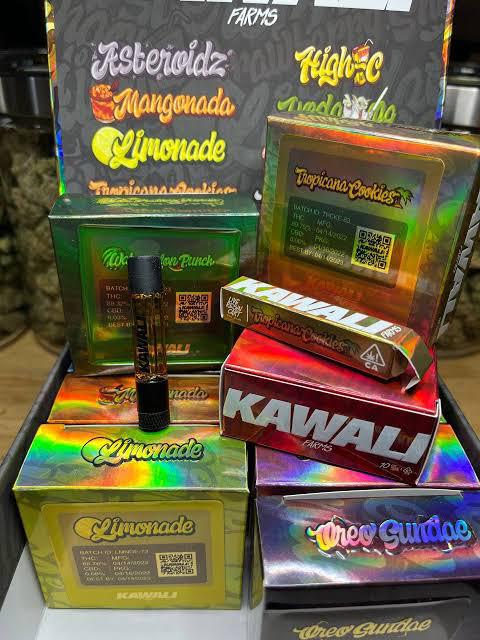
| FLAVORS | LEMONADE, ASTEROIDS, BIRTHDAY CAKE, OREO SUNDAE, STRAWBERRY SHERBET, WATERMELON PUNCH, MANGONADA, HIGH |
|---|
Related products

Recently Viewed Products

Reviews
There are no reviews yet.